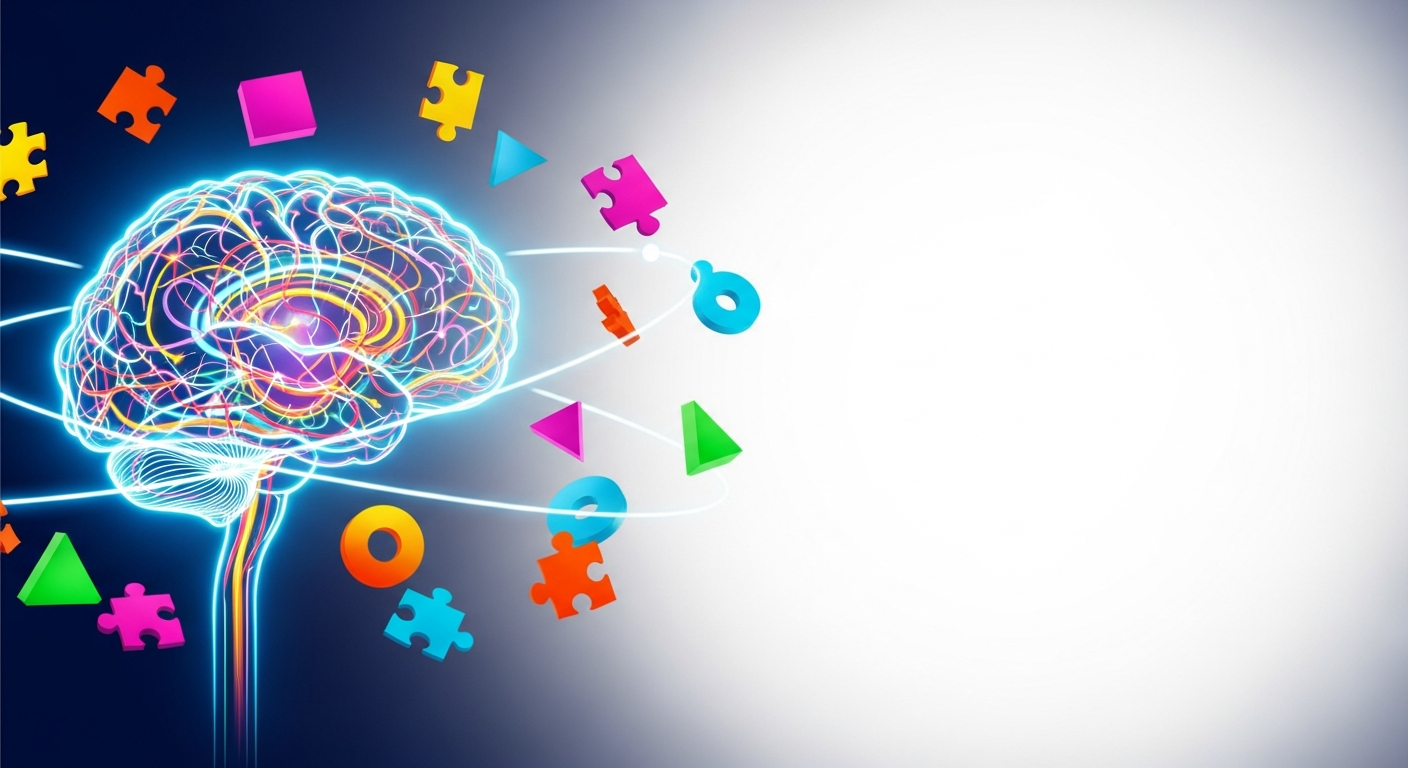
#Introduction: The Rise of the Digital Brain Gym and the Promise of Neuroplasticity
For decades, the gold standard of mental exercise was the Sunday crossword or a quiet afternoon with a Sudoku book. While these activities are certainly beneficial, the landscape of cognitive health has undergone a radical transformation. We are currently witnessing the rise of the "digital brain gym," a multi-billion dollar industry built on the premise that we can sharpen our minds just as we sculpt our muscles. This shift is driven by a profound scientific concept known as neuroplasticity—the brain's remarkable ability to reorganize itself by forming new neural connections throughout life.
The promise of brain training games is no longer just about high scores or beating a digital timer. It is about harnessing neuroplasticity exercises to build a more resilient mind. In an era where digital distractions are constant, the idea that we can use our devices to actually improve our focus is incredibly compelling. However, as we move beyond the hype, it is essential to understand how to approach these tools with a sense of "Neuro-Sustainability"—focusing on long-term cognitive reserve rather than a temporary "brain hack."
By engaging with targeted cognitive challenges, we aren't just passing the time; we are potentially fortifying our brains against the natural wear and tear of aging. This guide explores the science behind these games and how you can integrate them into a lifestyle that promotes lifelong sharpness and mental agility.
Key Takeaway: Modern brain training leverages neuroplasticity to build long-term cognitive reserve, moving beyond simple puzzles toward science-backed digital exercises.
#The Science of Cognitive Training: Can Games Really Make You Smarter?
The question of whether cognitive games for adults can truly increase general intelligence is a subject of intense debate in the scientific community. Early studies suggested that training on specific tasks could lead to broad improvements in "fluid intelligence"—the ability to solve new problems and think logically. While some of the more hyperbolic claims have been walked back, the underlying science remains robust: targeted mental stimulation changes the brain's structure and function.
Research indicates that the most effective games are those that push the user to the edge of their capability. This is known as "adaptive training." When a game becomes too easy, the brain enters a state of autopilot, and the cognitive benefits plateau. To keep the brain in a state of growth, the challenge must constantly evolve. This is why a sophisticated mental agility app is often more effective than a static puzzle; it monitors your performance and increases the difficulty in real-time to ensure you are always operating in the "growth zone."
Furthermore, the focus has shifted from "making you smarter" to "keeping you sharp." Scientists are particularly interested in how these games can contribute to cognitive decline prevention. By consistently challenging the prefrontal cortex and the hippocampus, individuals may be able to delay the onset of age-related memory issues. The goal isn't necessarily a higher IQ score, but a brain that remains functional, adaptable, and efficient well into the later stages of life.
Key Takeaway: Effectiveness depends on "adaptive training"—consistently challenging the brain at the edge of its current ability to trigger structural changes.
#Core Benefits: Why Cognitive Games for Adults are More Than Just Entertainment
While many people start using brain health apps for the novelty, the benefits extend far beyond simple entertainment. One of the primary advantages is the improvement of "executive function." This is a set of mental skills that include working memory, flexible thinking, and self-control. In our daily lives, we use executive function to manage time, pay attention, and switch focus between tasks. Strengthening these "muscles" through gameplay can lead to a more organized and productive professional life.
Another critical benefit is the enhancement of processing speed. As we age, the speed at which our brains process visual and auditory information tends to slow down. Many focus and concentration games are designed specifically to target this speed. By training the brain to identify patterns and react more quickly to stimuli, users often report feeling more "on the ball" in real-world scenarios, such as driving or participating in fast-paced conversations.
Finally, there is the psychological benefit of "mastery." Engaging in puzzle games for brain health provides a sense of accomplishment and agency. In a world where many factors of our health feel outside of our control, taking ten minutes a day to actively work on your cognitive fitness can reduce anxiety about aging and foster a proactive mindset toward wellness. It is about building a "cognitive buffer" that allows you to handle life's complexities with greater ease.
Key Takeaway: Cognitive games improve executive function, processing speed, and provide a psychological sense of mastery, contributing to a more resilient and organized mind.
#Top Categories of Brain Training Games: Memory, Attention, and Problem Solving
Not all brain training games are created equal. To build a well-rounded mental fitness routine, it is important to understand the different categories of cognitive exercise. The first major category is memory improvement games. These typically focus on "working memory"—the ability to hold and manipulate information in your mind over short periods. Exercises might involve remembering a sequence of symbols or the location of objects on a grid, which is essential for following complex instructions or keeping track of a conversation.
The second category is attention and focus. These games are designed to train the brain to ignore distractions and maintain concentration on a single task. In the age of the smartphone, our "attentional filters" are often overworked and under-trained. Focus and concentration games often involve "interference" tasks, where you must identify a specific target while being bombarded by irrelevant data. This helps the brain get better at "top-down" processing, allowing you to stay focused on what matters most.
The third pillar is problem-solving and logic. These games challenge your "fluid reasoning"—the ability to see patterns and solve novel problems without relying on previous knowledge. Executive function training often falls into this category, requiring the player to plan several steps ahead, adapt to changing rules, and think outside the box. By rotating through these categories, you ensure that you are providing your brain with a "cross-training" experience that touches on all major cognitive domains.
Key Takeaway: A balanced routine should target three main areas: working memory, attentional focus, and fluid problem-solving to ensure comprehensive cognitive development.
#The Search for the Perfect Mental Agility App: Criteria for Selection
With hundreds of brain health apps available in the app stores, choosing the right one can be overwhelming. The first criterion for a high-quality mental agility app is scientific backing. Look for apps that have been used in peer-reviewed studies or have a team of neuroscientists on their advisory board. While no app can guarantee a specific outcome, those built on established neuropsychological principles (like the N-back task or the Stroop effect) are generally more effective.
The second factor is variety and novelty. As mentioned earlier, the brain stops growing when it gets bored. A good app should offer a wide range of games that target different cognitive functions. If you find yourself playing the same three games every day, you are likely just getting good at those specific games rather than improving your overall brain health. Look for platforms that release new challenges regularly and keep the experience fresh.
Lastly, consider the user experience and data tracking. A great app should provide you with clear feedback on your progress. This isn't just for motivation; it helps you identify which areas of your cognition are strongest and which need more attention. However, avoid apps that use predatory "gamification" tactics to keep you playing for hours. The goal of a "Neuro-Sustainable" approach is short, focused bursts of high-quality effort, not mindless scrolling.
Key Takeaway: Choose apps that are scientifically grounded, offer a wide variety of tasks to prevent plateaus, and provide meaningful progress tracking without being addictive.
#Deep Dive: 5 Memory Improvement Games Backed by Research
When it comes to memory improvement games, certain types of exercises have stood the test of time in laboratory settings. One of the most famous is the "Dual N-Back" task. In this game, you are presented with a sequence of visual and auditory stimuli and must identify when the current stimulus matches the one presented "n" steps back. Research has shown that consistent practice with Dual N-Back can significantly improve working memory capacity and may even have a "transfer effect" to other cognitive tasks.
Another effective exercise is "Spatial Recall." This involves viewing a grid of squares where certain squares light up in a specific sequence. You must then repeat that sequence. This targets the visuospatial sketchpad of your memory, which is what we use to navigate through a city or remember where we left our keys. Similarly, "Object-Location" games, where you must remember the placement of various items in a virtual room, have been shown to engage the hippocampus, a key area for long-term memory formation.
For verbal memory, "Word List Association" games are highly effective. These require you to memorize pairs of unrelated words and then recall the partner when prompted with one of them. Finally, "Digit Span" tasks—simply remembering and repeating increasingly long strings of numbers—remain a foundational tool for increasing the "bandwidth" of your immediate recall. Incorporating these specific types of cognitive games for adults into your routine provides a targeted workout for the brain's storage and retrieval systems.
Key Takeaway: Exercises like Dual N-Back, Spatial Recall, and Word Association are research-proven methods to expand working memory and enhance spatial navigation skills.
#Strategic Play: How to Use Puzzle Games for Brain Health Without Burnout
The key to "Neuro-Sustainability" is consistency over intensity. Many people approach puzzle games for brain health with the same "all-or-nothing" mentality they use for New Year's resolutions, playing for two hours a day for a week and then never touching the app again. This leads to cognitive burnout and zero long-term gain. Instead, the most effective strategy is the "Micro-Dosing" approach: 15 to 20 minutes of focused play, four to five days a week.
To avoid burnout, it is also helpful to integrate these games into existing "anchor habits." For example, you might play one memory game while your morning coffee is brewing or do a logic puzzle during your commute. By tethering the games to a daily routine, they become a low-friction part of your lifestyle rather than another chore on your to-do list. This consistent, low-stress engagement is what builds cognitive decline prevention over decades rather than weeks.
Furthermore, listen to your brain's signals. If you are feeling particularly fatigued or stressed, playing a high-intensity mental agility app might actually be counterproductive, as high levels of cortisol (the stress hormone) can inhibit learning. On those days, it is better to opt for a more relaxing, "flow-state" puzzle or simply take a break. The goal is to keep the relationship with brain training positive and rewarding, ensuring you’ll stick with it for the long haul.
Key Takeaway: Aim for 15-20 minutes of daily play tied to an existing habit; consistency is more important than the duration of any single session.
#The 'Transfer Effect': Making Sure Game Gains Apply to Real-Life Tasks
The ultimate goal of brain training games is not to become a world champion at a digital puzzle, but to see improvements in your daily life. This is known as the "Transfer Effect." Far-transfer—the idea that playing a game will automatically make you better at everything from public speaking to financial planning—is rare. However, "near-transfer" is very real. If you train your attention, you will find it easier to stay focused during a long meeting. If you train your working memory, you’ll find it easier to remember a shopping list without writing it down.
To maximize this transfer, you must be intentional. When you finish a session on a brain health app, take a moment to reflect on how those skills apply to your day. If you just completed a task that required quick switching between rules, think about how that same mental flexibility is needed when you are multitasking at work. This "metacognition"—thinking about your thinking—helps bridge the gap between the digital game and the real world.
Another way to ensure transfer is to pair digital games with "analog" neuroplasticity exercises. For example, if you are working on spatial memory in an app, try navigating a new neighborhood without using GPS. If you are working on focus, try reading a challenging book for 30 minutes without checking your phone. By constantly looking for real-world applications, you turn your entire environment into a cognitive training ground.
Key Takeaway: Maximize the "Transfer Effect" by consciously applying the mental strategies learned in games to real-world challenges like focus, organization, and navigation.
#Common Myths: What Brain Training Can and Cannot Do
It is important to manage expectations by debunking some common myths surrounding cognitive games for adults. The biggest myth is that brain games are a "magic bullet" that can compensate for a poor lifestyle. No amount of executive function training can undo the cognitive damage caused by chronic sleep deprivation, a sedentary lifestyle, or a poor diet. Brain games are a supplement to, not a replacement for, the foundational pillars of health: sleep, exercise, and social connection.
Another myth is that brain games can "cure" or completely prevent Alzheimer's disease. While cognitive decline prevention is a major area of research, dementia is a complex condition influenced by genetics, environment, and biology. Brain training can certainly build "cognitive reserve"—essentially a more robust neural network that can better withstand the pathology of disease—but it is not a guaranteed shield. It is about shifting the odds in your favor, not providing an absolute guarantee.
Finally, there is the myth that "harder is always better." While challenge is necessary, pushing yourself to the point of extreme frustration can lead to a "diminishing returns" effect. The brain learns best when it is in a state of "relaxed alertness." If a mental agility app makes you feel angry or inadequate, it is no longer serving its purpose. The most effective training feels like a "good stress"—challenging, but ultimately achievable and satisfying.
Key Takeaway: Brain games are not a substitute for healthy sleep and exercise, nor are they a guaranteed cure for disease; they are one tool in a larger toolkit for building cognitive reserve.
#Conclusion: Creating a Balanced Mental Fitness Routine for the Long Term
The journey toward lifelong mental sharpness is a marathon, not a sprint. While brain training games offer a powerful and convenient way to engage in neuroplasticity exercises, they are most effective when integrated into a holistic "Neuro-Sustainable" lifestyle. By choosing the right brain health apps, focusing on a variety of cognitive domains, and maintaining a consistent, low-stress routine, you can build a mind that is not only faster today but more resilient for years to come.
Remember that the best cognitive games for adults are those that you actually enjoy playing. Whether it's a high-tech mental agility app or a classic puzzle game for brain health, the value lies in the habit. Combine your digital training with physical exercise (which increases blood flow to the brain), a Mediterranean-style diet, and rich social interactions to create the ultimate environment for your neurons to thrive.
Are you ready to take the next step in your cognitive journey? Start today by picking one area of focus—perhaps it's memory improvement games or focus and concentration games—and dedicate just 15 minutes to it. Your future self will thank you for the investment you're making in your most valuable asset: your mind. Stay curious, stay challenged, and keep playing.
Key Takeaway: For lifelong sharpness, combine consistent, varied brain training with a healthy lifestyle, viewing mental exercise as a rewarding, long-term habit.
Read next
See all →
Unlock Your Brain's Potential: The Power of Cognitive Games for Adults
Explore the transformative power of cognitive games designed for adults. Learn how engaging in these brain-training activities can enhance your memory, sharpen your focus, and boost overall mental agility, helping you unlock your brain's true potential.
The Science of Sharpness: Why a Daily Trivia Quiz is Your Best Morning Ritual
Start your day with a mental spark. This article explores the science behind daily trivia quizzes and how micro-learning habits can improve long-term cognitive health and focus.
Beyond Sudoku: The Science-Backed Guide to Brain Training Games for Adults
Move beyond basic puzzles with this comprehensive guide to science-backed brain training. Learn how modern cognitive games can enhance memory, executive function, and overall neuroplasticity.