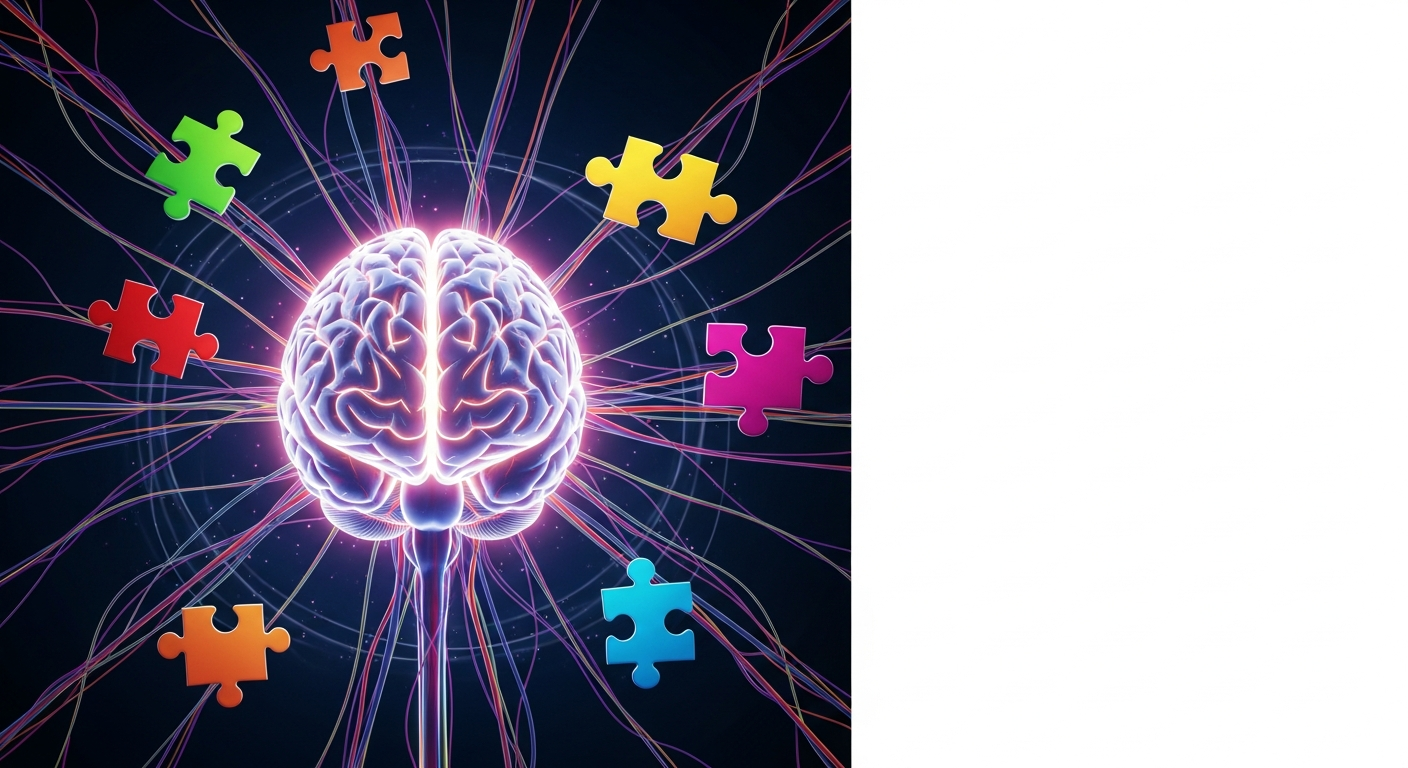
#The Power of the Daily Trivia Quiz: Why 10 Minutes a Day Makes You Smarter
We have all been there. You wake up, reach for your phone, and before your feet even touch the floor, you are twenty minutes deep into a "doomscroll." You’ve seen three controversial news headlines, a dozen curated vacation photos, and a video of a cat playing a piano. While these activities provide a temporary hit of dopamine, they often leave the mind feeling sluggish, cluttered, and strangely unfulfilled. This is the era of passive consumption, where information washes over us without leaving a trace of actual knowledge behind.
However, a growing movement of "intentional learners" is trading the mindless scroll for something far more potent: the daily trivia quiz. By shifting from passive consumption to active engagement, these individuals are leveraging micro-learning benefits to sharpen their intellect and improve their focus. Instead of letting the algorithm dictate their morning, they are choosing to challenge their brains with structured, gamified information. It is a small shift in habit that yields massive dividends in cognitive clarity and general knowledge.
The beauty of the quiz of the day lies in its simplicity. It doesn’t require an hour of study or a library of textbooks. It requires ten minutes, a bit of curiosity, and the willingness to be wrong. As we dive into the mechanics of why this habit is so effective, you’ll see that it isn’t just about knowing who painted the Sistine Chapel or which country has the most coastline; it’s about the fundamental way your brain processes, stores, and retrieves information in a digital world.
Key Takeaway: Transitioning from passive social media scrolling to an active daily trivia quiz transforms your first few minutes of the day from a time of mental drainage to a period of intentional cognitive growth.
#The Cognitive Science: How a Daily Trivia Quiz Boosts Memory and Neuroplasticity
At the heart of the daily trivia quiz is a psychological phenomenon known as the "retrieval effect." Unlike reading a book or watching a documentary—where information is fed to you—trivia requires you to "pull" information from the depths of your memory. This act of retrieval strengthens the neural pathways associated with that information. Every time you struggle to remember the name of a historical figure or a scientific principle and then finally recall it (or even see the correct answer), you are physically altering your brain’s architecture through neuroplasticity.
Consistent participation in a quiz of the day also contributes to what scientists call "cognitive reserve." Think of your brain like a muscle that requires regular resistance training to stay strong. By engaging in brain training habits, you are essentially building a buffer against age-related cognitive decline. When you challenge yourself with diverse topics—ranging from geography to pop culture—you are forcing different regions of the brain to communicate, fostering a more interconnected and resilient neural network.
Furthermore, the "Aha!" moment experienced during trivia releases a small burst of dopamine. This isn't the hollow dopamine of a "like" on social media; it is the reward for problem-solving and learning. This positive reinforcement loop makes the brain crave more knowledge, making it easier to adopt other healthy micro-learning benefits throughout your day. Over time, this daily exercise doesn't just make you better at trivia; it makes your brain more efficient at processing new information in all areas of life.
Key Takeaway: Active retrieval through a daily trivia quiz strengthens neural pathways and builds cognitive reserve, making your brain more resilient and efficient at learning.
#The 'Mental Espresso' Effect: Why a Daily Quiz App is the Perfect Morning Routine
Caffeine is the traditional way to wake up the body, but the daily quiz app has become the modern way to wake up the mind. We like to call this the "Mental Espresso" effect. Just as a shot of caffeine jumpstarts your central nervous system, a quick session with today's trivia questions provides a morning mental exercise that clears the "brain fog" often associated with the first hour of the day. It demands focus, forces logical reasoning, and requires immediate memory recall—all of which act as a high-octane fuel for your cognitive engine.
Replacing the morning news scroll with a daily trivia quiz also has a profound impact on your emotional state. The news is often designed to trigger anxiety or outrage, which sets a negative tone for the rest of your day. Conversely, a trivia quiz is a "low-stakes challenge." It provides a sense of play and intellectual stimulation without the stress. Starting your day with a win—even if it’s just getting 7 out of 10 questions right—creates a sense of competence that carries over into your professional tasks.
Moreover, using a daily quiz app helps establish a boundary between sleep and work. It serves as a transitional ritual. By the time you open your email or walk into a meeting, your brain has already been "warmed up." You've already navigated complex questions and recalled obscure facts, meaning your executive functions are fully online and ready to tackle the complex problem-solving required in your career.
Key Takeaway: A daily quiz app serves as a "mental espresso," providing a stress-free cognitive warm-up that replaces the anxiety of the morning news with a sense of accomplishment and focus.
#The Anatomy of the Perfect Challenge: Why the 10 Question Trivia Daily Format is the 'Goldilocks' of Mental Exercise
Why has the 10 question trivia daily format become the industry standard for mental fitness? It comes down to the "Goldilocks Principle"—it’s not too short to be trivial, and not too long to be a chore. A three-question quiz feels like a fluke, while a fifty-question test feels like an exam. Ten questions, however, provide enough variety to cover multiple subjects while remaining short enough to fit into a commute, a coffee break, or the time it takes for the toaster to pop.
This specific format respects the modern attention span. In a world of TikToks and tweets, our ability to sustain deep focus is under siege. A 10 question trivia daily session requires just enough sustained attention to be beneficial without becoming overwhelming. It encourages a "sprint" mentality toward learning, which is often more effective for retention than long, drawn-out study sessions that lead to mental fatigue.
Additionally, the 10-question structure allows for a balanced mix of difficulty. A well-designed quiz of the day will usually feature a few "easy wins" to build confidence, several moderate challenges to test your knowledge, and one or two "stumpers" that force you to learn something entirely new. This balance is crucial for maintaining engagement. If it’s too easy, you get bored; if it’s too hard, you quit. The 10-question format hits that sweet spot of "desirable difficulty" that keeps users coming back day after day.
Key Takeaway: The 10 question trivia daily format is the ideal length for gamified learning, offering enough challenge to stimulate the brain without demanding an excessive amount of time or focus.
#The Psychology of the Streak: How a Quiz of the Day Builds Discipline
One of the most powerful features of any modern daily quiz app is the "streak" counter. While it might seem like a simple UI trick, the general knowledge streak taps into deep-seated psychological drivers: the desire for consistency and the fear of loss. Once you have successfully completed a daily trivia quiz for five, ten, or thirty days in a row, the psychological cost of "breaking the chain" becomes higher than the effort required to simply take the quiz.
This "streak" mentality is a cornerstone of effective brain training habits. It moves the activity from something you do "when you feel like it" to a non-negotiable part of your identity. You become "the person who does the daily quiz." This shift from goal-based motivation to identity-based motivation is how long-term habits are formed. The discipline required to maintain a general knowledge streak often spills over into other areas of life, such as exercise, reading, or productivity at work.
Furthermore, the quiz of the day provides immediate feedback. In many areas of life, we don't know if our efforts are paying off for months or years. With trivia, you know your score instantly. You can see your progress over time as your average score climbs and your "weak" subjects become strengths. This sense of tangible growth is incredibly satisfying and provides a sense of agency in a world that often feels chaotic and unpredictable.
Key Takeaway: Maintaining a general knowledge streak uses the psychology of consistency to turn micro-learning benefits into a permanent, disciplined lifestyle habit.
#Social Connection in a Digital Age: Sharing Today's Trivia Questions
Trivia has always been a social endeavor—from the "pub quiz" traditions of the UK to televised game shows. In the digital age, this social element has been supercharged. We feel a natural compulsion to share today's trivia questions with friends, family, or coworkers because knowledge is a form of social currency. Sharing a particularly difficult question or a perfect score is a way of saying, "I’m curious about the world, are you?"
This social sharing creates a "community of inquiry." When you text a friend about a daily trivia quiz question regarding a 14th-century explorer, you aren't just sharing a fact; you’re sparking a conversation. It provides a common ground that transcends politics, work stress, and the mundane details of daily life. It’s a healthy form of competition that fosters connection rather than division, allowing people to bond over their shared love of learning.
Many families and friend groups now use today's trivia questions as a daily touchpoint. In an era where many of us live far from our loved ones, a quick message about the quiz of the day provides a low-pressure way to stay in touch. It’s a shared experience that happens simultaneously, creating a sense of "togetherness" in a digital landscape that can often feel isolating.
Key Takeaway: Sharing today's trivia questions transforms a solitary morning mental exercise into a powerful tool for social bonding and intellectual community building.
#Beyond General Knowledge: Improving Problem-Solving and Lateral Thinking
While the immediate goal of a daily trivia quiz is to learn facts, the secondary benefit is the development of lateral thinking and problem-solving skills. Often, you may not know the answer to a question directly, but you can deduce it by connecting disparate pieces of information. This is the essence of gamified learning: it teaches you how to think, not just what to think. You learn to use the process of elimination, to look for linguistic clues, and to draw parallels between different fields of study.
In a professional setting, these skills are invaluable. The ability to connect "Point A" in marketing to "Point B" in historical consumer behavior is what defines innovative thinkers. Consistent brain training habits through trivia encourage your mind to stay "plastic" and open to new associations. It prevents the kind of rigid, siloed thinking that often leads to professional stagnation. When you are used to being challenged with new topics every morning, you become more comfortable with the "unknowns" you encounter in your career.
Furthermore, trivia improves your "intellectual agility." In meetings or negotiations, the ability to quickly recall a relevant fact or make a witty, informed observation can significantly boost your credibility. It demonstrates a broad worldview and a curious mind—traits that are highly valued in leadership and creative roles. By investing 10 minutes in a daily trivia quiz, you are essentially sharpening the tools you use to navigate the complexities of your professional life.
Key Takeaway: Consistent trivia practice fosters lateral thinking and intellectual agility, helping you solve complex problems and connect ideas more effectively in your professional career.
#Conclusion: Sharpening Your Mind One Day at a Time
The daily trivia quiz is far more than a simple game; it is a commitment to lifelong learning. In a world that constantly tries to capture our attention with passive, low-value content, choosing to engage in micro-learning benefits is a radical act of self-improvement. By dedicating just 10 minutes a day to a quiz of the day, you are actively improving your memory, boosting your mood, and building a more resilient brain. You are replacing the "empty calories" of social media with the "mental espresso" of active learning.
The beauty of this habit is that it is accessible to everyone. Whether you use a daily quiz app during your morning coffee or tackle a 10 question trivia daily session before bed, the cumulative effect over months and years is staggering. You will find yourself knowing more, thinking faster, and feeling more connected to the world around you. Your general knowledge streak is not just a number on a screen—it is a testament to your curiosity and your dedication to personal growth.
So, tomorrow morning, when you reach for your phone, make a different choice. Ignore the notifications, skip the headlines for a moment, and look for today's trivia questions. Challenge yourself, learn something new, and start your day with the intellectual spark you deserve. Your brain will thank you.
Are you ready to start your streak? Download a daily quiz app today and see how 10 minutes can change the way you think!
Read next
See all →
Unlock Your Brain's Potential: The Power of Cognitive Games for Adults
Explore the transformative power of cognitive games designed for adults. Learn how engaging in these brain-training activities can enhance your memory, sharpen your focus, and boost overall mental agility, helping you unlock your brain's true potential.
The Science of Sharpness: Why a Daily Trivia Quiz is Your Best Morning Ritual
Start your day with a mental spark. This article explores the science behind daily trivia quizzes and how micro-learning habits can improve long-term cognitive health and focus.
Beyond Sudoku: The Science-Backed Guide to Brain Training Games for Adults
Move beyond basic puzzles with this comprehensive guide to science-backed brain training. Learn how modern cognitive games can enhance memory, executive function, and overall neuroplasticity.